
Many travel agencies sell through WhatsApp and Instagram, and that comes with a hidden cost: the team spends the day answering the same questions about prices, dates, and what each package includes, while customers lose interest waiting for a reply. To show how a website can change that, we designed Rumbo Viajes, a fictional agency, and in this article we explain every design decision and why we made it.
What problem does the Rumbo Viajes website solve?
It solves the flood of repeated questions. Instead of customers messaging to ask about prices, dates, or what a package includes, the website gives them that information on their own, leaving the sales team with just the part that needs a person: closing the sale. The goal isn't to replace the conversation, but to make it start further along.
Every section of the website answers a question a customer would otherwise send in a message. If the website answers it first, that question never reaches the inbox.
Why is the search bar on the first screen?
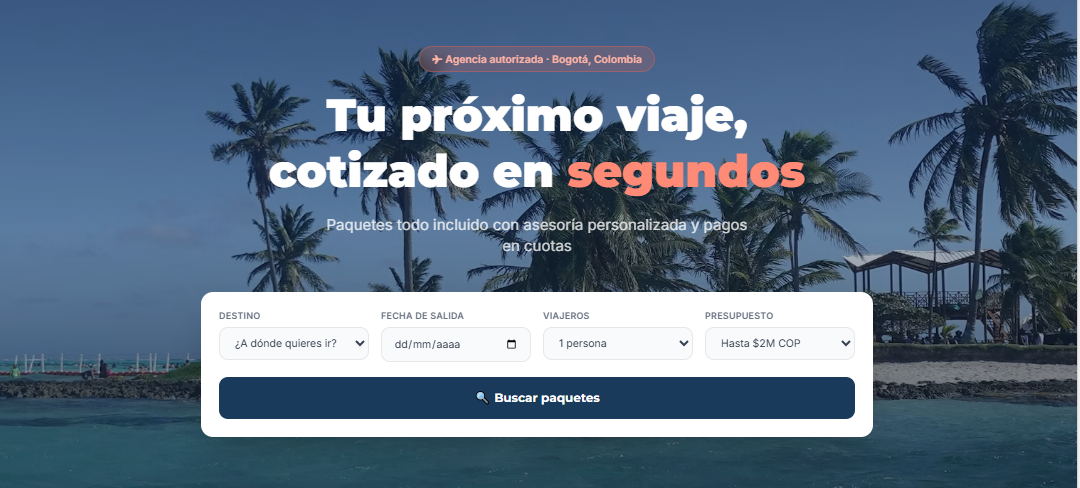
Because people who visit a travel agency's website already arrive with an intent: they want to know where they can go, when, and for how much. Placing the search bar on the first screen meets that intent from the very first second, without forcing visitors to dig through menus or send a message to ask.
The search bar asks for four details: destination, departure date, number of travelers, and budget. They're the same questions a sales agent would ask by message, and with them the website can already show packages that fit.
Why show the price of every package?
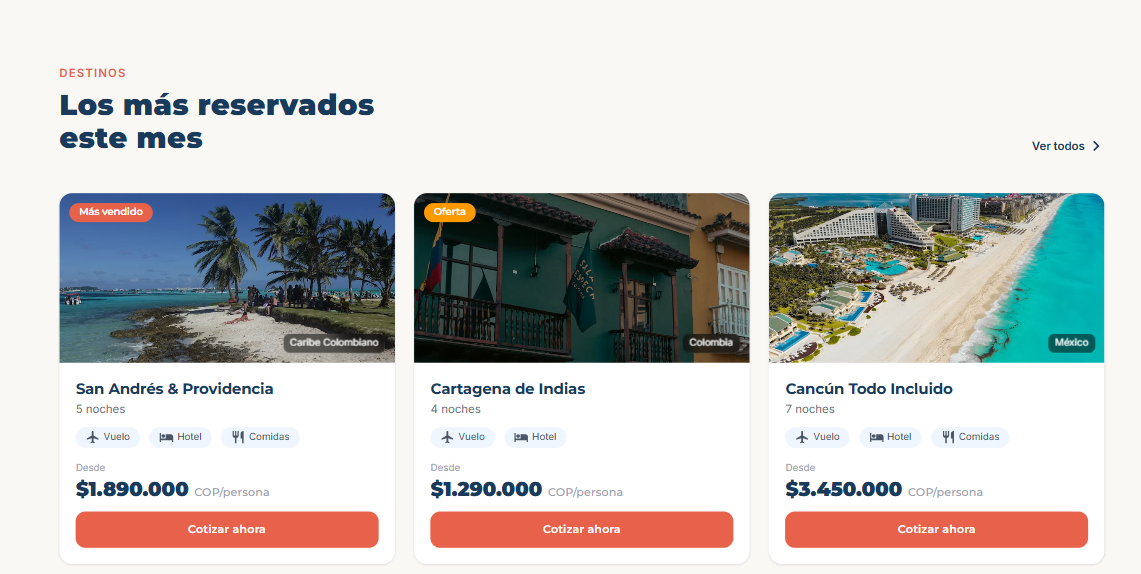
Because price is the most frequent question a travel agency gets. Showing it, even as a starting price, answers that question before it arrives by message and filters out people outside the budget. Whoever reaches out afterward already knows the cost and comes with a clearer intent to buy.
Each package card shows the destination, the number of nights, what's included (flight, hotel, meals), and the price per person. Labels like "Best seller" or "Deal" help visitors decide quickly without comparing everything.
What is browsing by trip type for?
It's for the customer who doesn't know where to go yet, but does know what kind of experience they want. Instead of starting with a destination, they can start with how they want to feel: beach, adventure, romantic, or family. That way, the website guides them without needing a sales agent.
This section also works as inspiration: it shows options the customer may not have had in mind, and each category leads to specific packages with their prices.
Why does the quote form have only 4 fields?
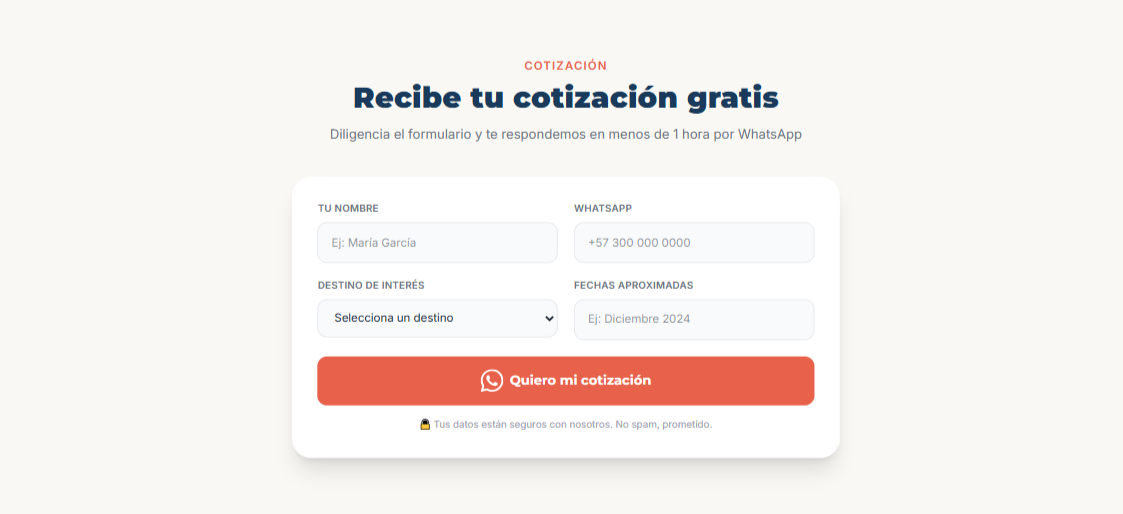
Because every extra field is one more reason to abandon the form. With name, WhatsApp number, destination of interest, and approximate dates, the team already has everything it needs to prepare a quote. Everything else, like hotel preferences or the exact number of travelers, can be handled in the conversation.
In this case, the form promises a reply within one hour by WhatsApp. A time commitment like that builds trust, but it should only be made if the team can keep it: a broken promise does more damage than making no promise at all.
Where does WhatsApp fit into a website that sells trips?
At the end of the journey, as the channel for closing the sale. On this website, WhatsApp stops being the inbox where every question lands and becomes the place where the purchase happens, with a customer who has already seen prices, chosen a trip type, and shared their details.
The floating WhatsApp button stays visible at all times for anyone who prefers to message directly, but the website is designed so that, when they do, the conversation starts much further along.
How do you measure whether a website like this works?
You measure it with conversion events, not just visits. Since Rumbo Viajes is a concept case, it has no real results, but these are the metrics we would set up from day one to know whether the website is meeting its goal and where in the journey customers are being lost.
The main ones would be: how many people use the search bar, which packages get the most clicks, how many submit the quote form (the generate_lead event in Google Analytics 4), and how many click through to WhatsApp. If you want to know what other elements a website that converts should have, we cover them in our guide to the 7 elements.
What can your agency apply today?
Even if you don't redesign your website, you can start by checking three things. First, whether a visitor can see prices without messaging you. Second, whether your form asks only for what's needed to start a quote. And third, whether you know how many quote requests your website brings in each month. If any of the three falls short, that's your first opportunity.
Conclusion
A travel agency website doesn't have to be just a pretty showcase: it can answer the usual questions, guide customers to the right package, and leave the team with the part that truly needs a person, which is closing the sale. Every design decision in Rumbo Viajes starts from a simple question: does this save the customer a message, or bring them closer to buying?
If you want your website to work like this, message us on WhatsApp and let's talk about your agency.
Frequently asked questions
What is a concept case?
It's a project we design for a fictional brand to show our process and our design decisions. It doesn't belong to a real client and doesn't present real results.
Is it a good idea to show prices on a travel agency website?
In most cases, yes. Showing a starting price answers the most frequent question, filters out people outside the budget, and makes customers who reach out arrive with a clearer intent.
How many fields should a quote form have?
The minimum needed to start a quote. For a travel agency, four are usually enough: name, WhatsApp number, destination, and approximate dates. Everything else can be handled in the conversation.
Does the website replace customer service on WhatsApp?
No. The website answers repeated questions and guides the customer, while WhatsApp remains the channel for closing the sale with someone who already knows the prices and options.